
Digital transformation in logistics is no longer a future concept or a competitive advantage reserved for large enterprises. It has become a necessity for any company that wants to survive and grow in an industry defined by speed, efficiency, and customer expectations. From fleet management to warehouse operations and last mile delivery, every part of the logistics chain is being reshaped by digital tools and data driven decision making. However, many companies still struggle with one fundamental question: where should we actually start?
The challenge is not a lack of technology but rather uncertainty about priorities. Logistics companies often face fragmented systems, manual workflows, and disconnected teams, which makes the idea of transformation feel overwhelming. The key is not to change everything at once but to build a structured roadmap that gradually replaces inefficiencies with digital processes.
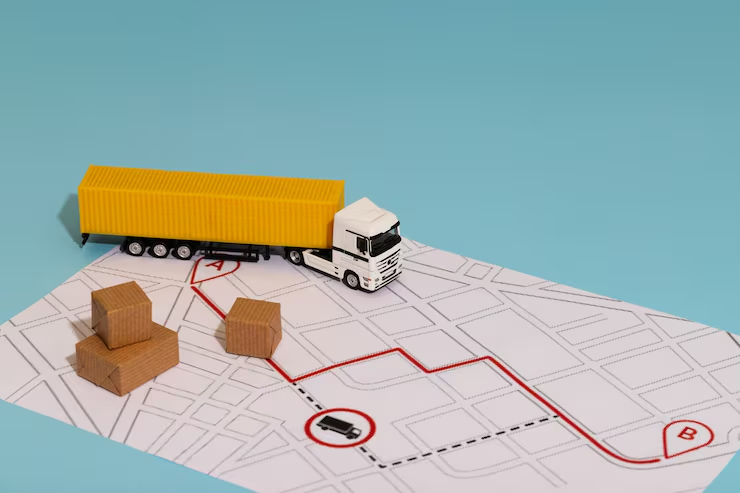
The first step in digital transformation is visibility. Without clear visibility into operations, no optimization is possible. This means understanding where your vehicles are, how your deliveries are performing, and what is happening across your supply chain in real time. Many logistics companies still rely on spreadsheets or delayed reports, which prevents them from reacting quickly to problems. Implementing real time tracking and centralized dashboards is often the most impactful starting point because it immediately improves decision making and operational awareness.
Once visibility is established, the next focus should be operational efficiency. This is where tools like route optimization, automated dispatching, and fleet management systems come into play. Instead of manually assigning routes or relying on driver experience alone, digital systems can analyze traffic, delivery windows, and vehicle capacity to generate optimized plans. This reduces fuel consumption, improves delivery speed, and increases overall fleet productivity.
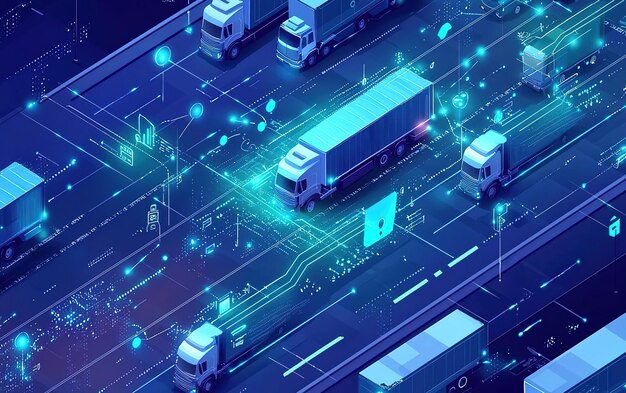
Another important area is data collection and analysis. Digital transformation is not just about automation, it is about learning from data. Every delivery, every delay, and every route contains valuable information that can be used to improve future performance. Companies that invest in analytics tools can identify patterns such as recurring delays, inefficient routes, or underutilized vehicles and make proactive improvements instead of reactive fixes.
Customer experience is also a critical part of digital transformation in logistics. Today’s customers expect accurate delivery times, real time tracking, and transparent communication. Implementing digital customer facing tools such as live tracking links, automated notifications, and delivery updates can significantly improve satisfaction and trust. In many cases, customer experience becomes a direct competitive advantage in crowded logistics markets.
Another essential step is automation of manual processes. Many logistics operations still depend heavily on human input for tasks such as scheduling, reporting, invoicing, and documentation. These processes are not only time consuming but also prone to errors. Automating them reduces operational costs and allows teams to focus on higher value activities such as planning and optimization.
However, successful digital transformation is not only about tools. It also requires a cultural shift within the organization. Teams need to move from intuition based decision making to data driven thinking. Managers must be willing to trust systems and analytics while also continuously refining processes based on insights. Without this mindset shift, even the best technology will fail to deliver its full value.
For companies just starting their journey, the best approach is to begin small but think long term. A common mistake is trying to implement too many systems at once, which leads to confusion and resistance. Instead, starting with a single area such as fleet tracking or route optimization allows teams to adapt gradually and see measurable improvements early on. These early wins then build momentum for broader transformation across the organization.
In conclusion, digital transformation in logistics is not a single project but an ongoing evolution. It starts with visibility, grows through optimization, and matures with automation and analytics. Companies that take a structured and phased approach will not only reduce operational inefficiencies but also build a more resilient and scalable logistics network. In a market where speed, accuracy, and cost efficiency define success, the ability to transform digitally is no longer optional, it is essential.